Research News
Pol Benítez Colominas defended his thesis co-supervised by Claudio Cazorla and Edgardo Saucedo on November 12 at the Diagonal-Besòs Campus. Entitled "Modeling Lattice-Mediated Optoelectronic Response in Anharmonic Semiconductors: A First-Principles and Machine Learning Study", the thesis presents a computational study of how the vibrations of atoms (phonons) modify the structure and optoelectronic properties of anharmonic semiconductors.

A 31-year study in Barcelona shows changes in pollen concentrations and seasonality in relation to climatic conditions

The project, led by Claudia Grossi with the participation of David Pino, has received support from Barcelona City Council under the 2026 General Call for Grants for District and City Projects, Activities, and Services (AJT.BCN)

Jon Garí Galíndez defended his thesis, co-supervised by Víctor Izquierdo Roca and Maxim Guc, on 14 September 2026 at the Diagonal-Besòs Campus. Entitled “Developing Artificial Intelligence Strategies to Accelerate Scientific Research: Application to Thin-Film Photovoltaic Technologies”, the thesis develops new explainable artificial intelligence (XAI) strategies to accelerate research on photovoltaic materials and devices by identifying how their physical properties govern device performance.

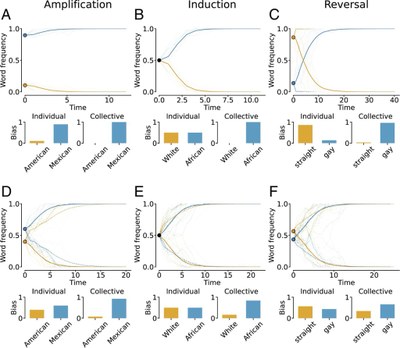
A collaboration among professor Romualdo Pastor-Satorras from the department of Physics of the Universitat Politècnica de Catalunya, and professors from the University of London and the University of Copenhagen have shown that interactions among large language model (LLM) agents can lead to collective misalignment, with emergent biases whose strength and form vary systematically with population size.
Juan Gancio defended his thesis co-directed by Cristina Masoller and Giulio Tirabassi on July 30 at the Terrassa Campus. Titled "Characterizing and detecting changes in complex multidimensional data with permutation entropy". The thesis analyzes the ability of permutation entropy-based measures to detect changes and characterize complex data in three interdisciplinary areas: data generated by highly multimode lasers, climatological data and electroencephalogram (EEG) signals.

An international team of researchers from UPC in Barcelona and the University of Queensland in Brisbane has developed a new theory to explain how microscopic thermal excitations determine the temperature dependence of collective oscillations in bosonic particles confined to one spatial dimension

Share: